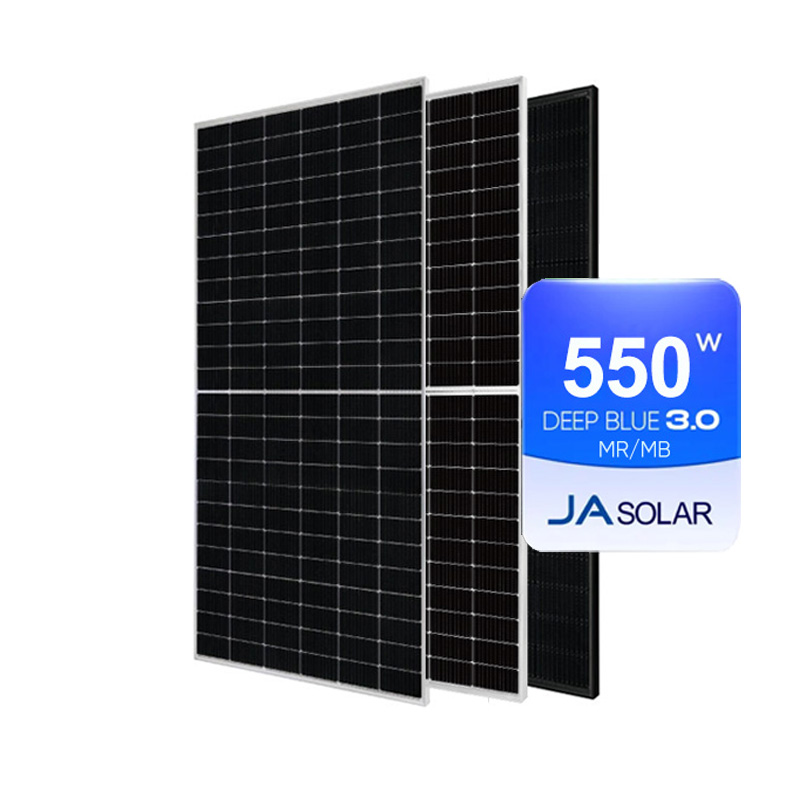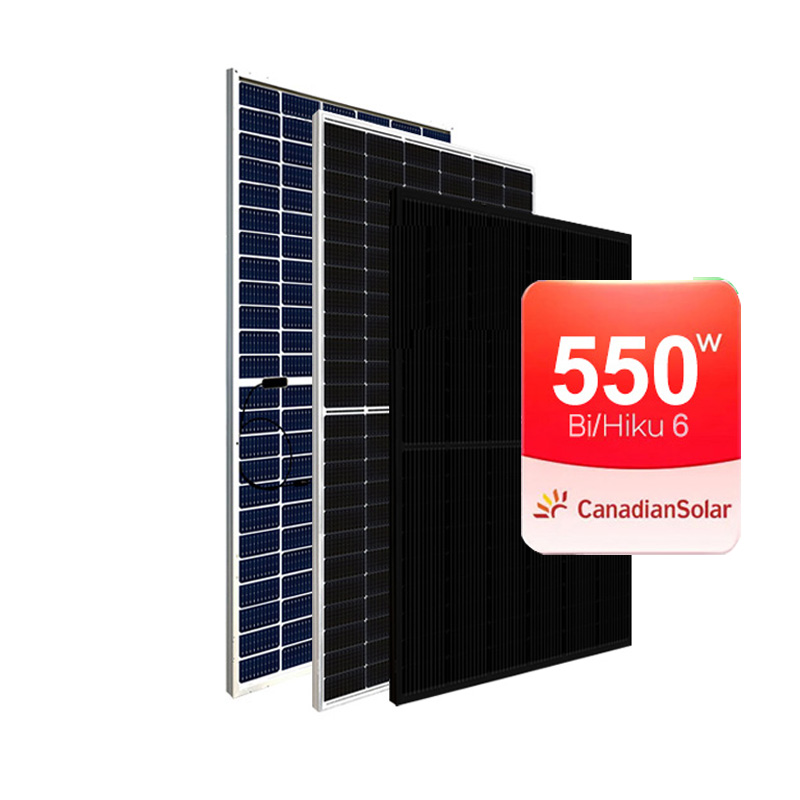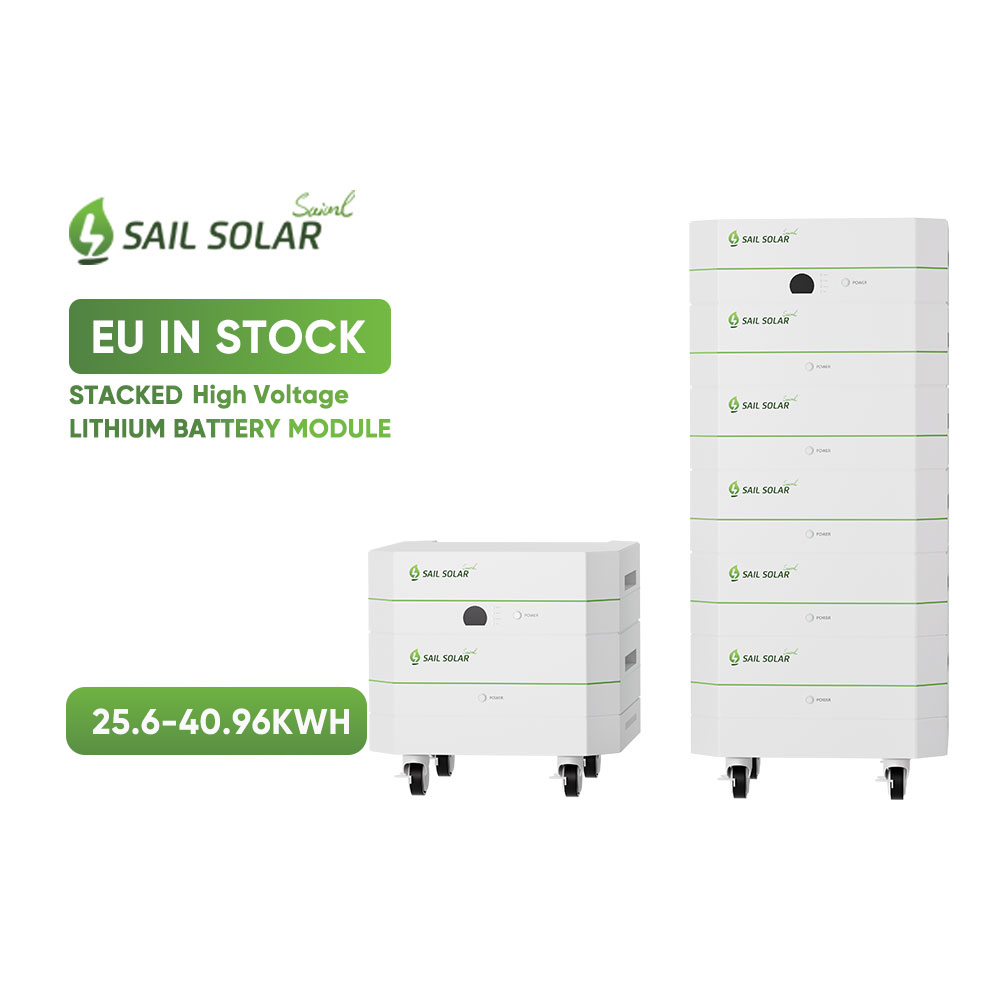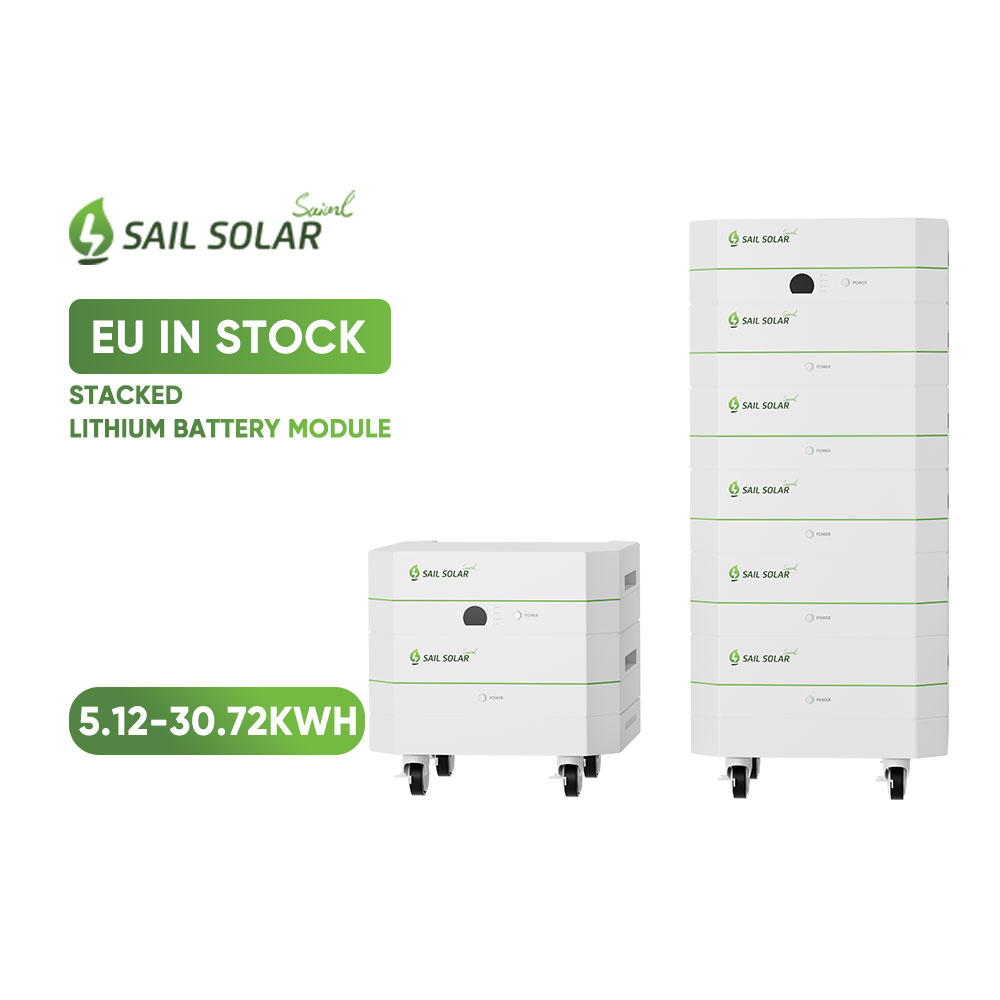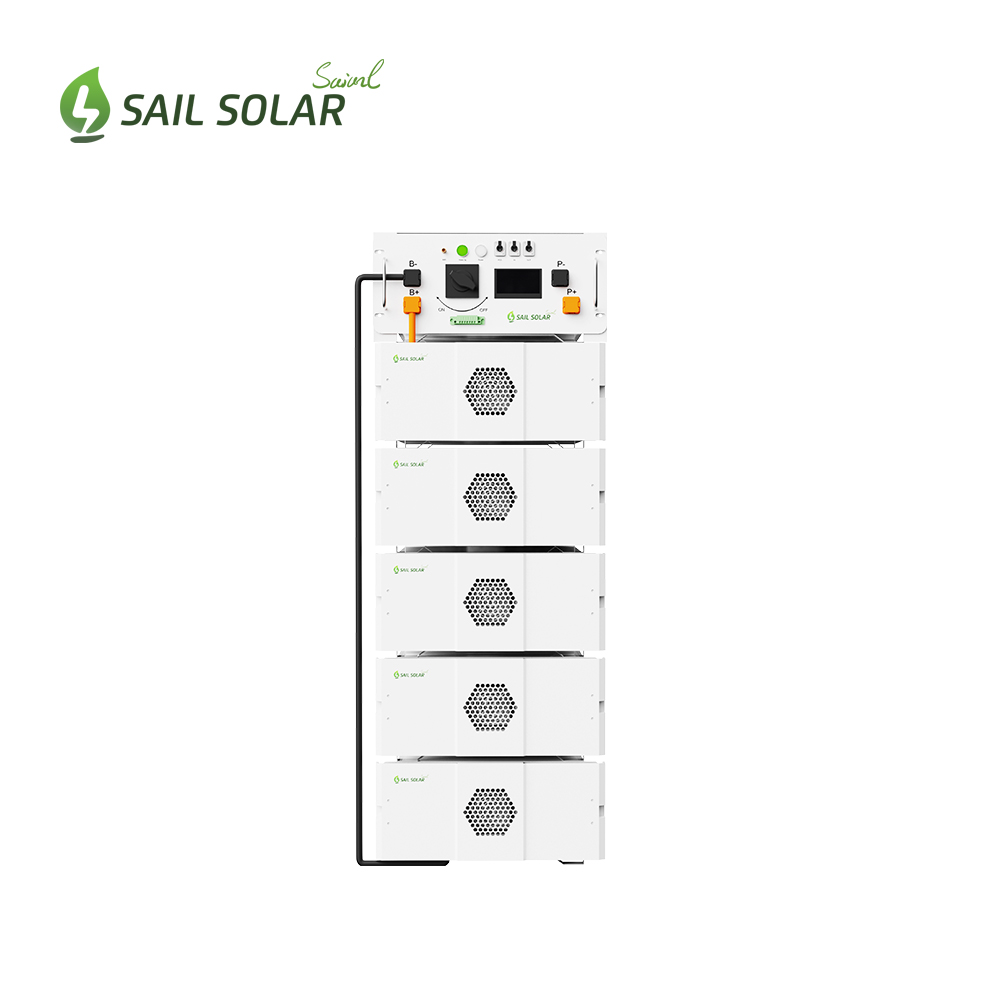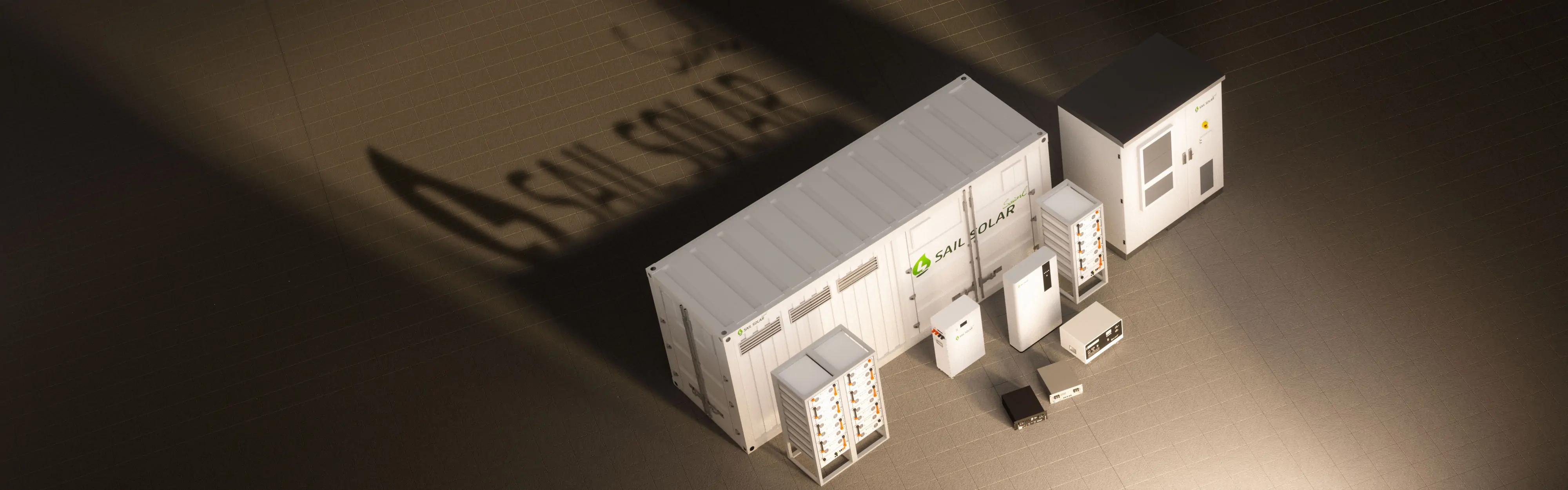
The 51.2V 100Ah High Voltage Stackable Lithium Battery Module is a safe, reliable, and scalable energy storage solution designed for residential, commercial, and industrial ESS applications. Built with LiFePO₄ (LFP) cells, the module offers long cycle life, high energy density, and excellent thermal stability. The stackable modular design allows flexible capacity expansion to meet different system requirements, making it ideal for hybrid and off-grid solar energy storage systems.
Marca :
SAIL SOLARTipo :
LiFePo4Tensão nominal :
51.2VCapacidade de carga :
5.12KWHNúmero de ciclos :
>8000 Cycles @0.2C 80%DoDEficiência de Carga :
100% @0.2CEficiência de Descarga :
96~99% @1CComunicação :
RS485/RS232/CANCor e OEM :
White or customizedgarantia :
10 Years
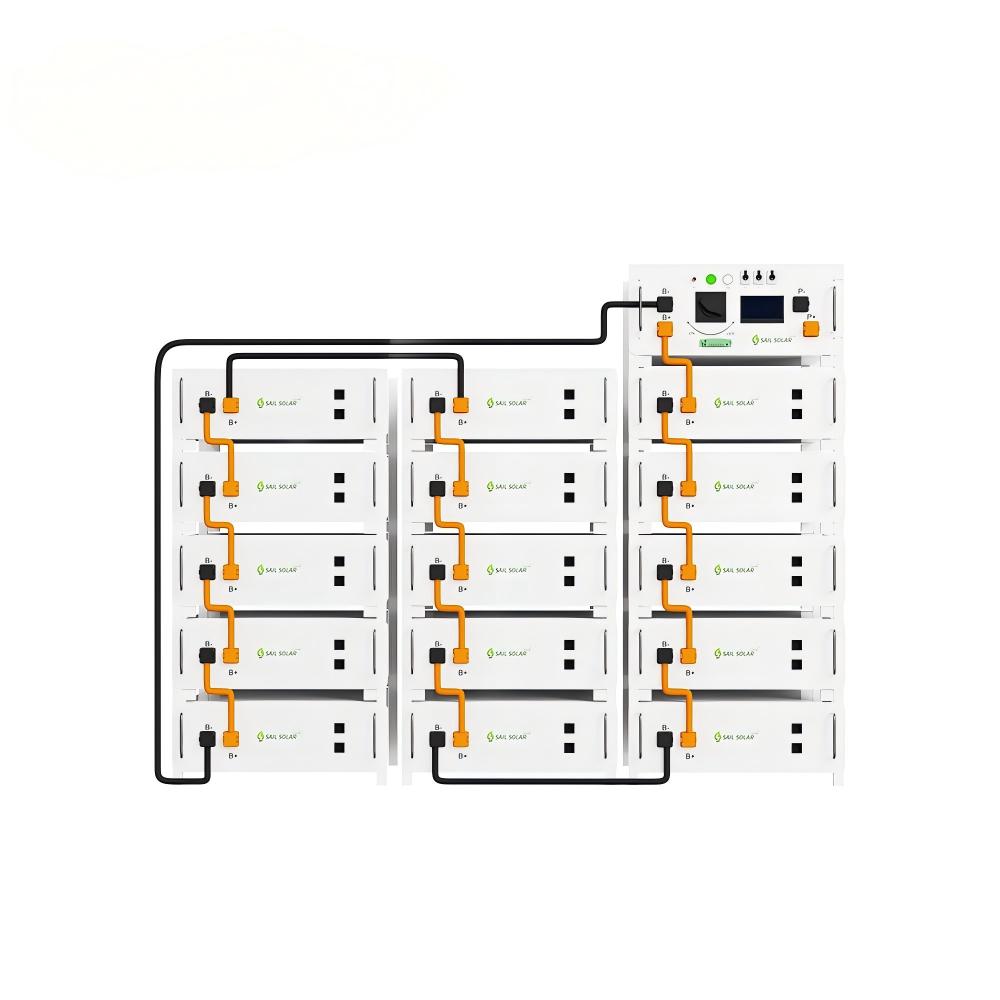
The 51.2V 100Ah lithium battery module is designed as a standardized building block for high-voltage energy storage systems, especially suitable for commercial & industrial (C&I) ESS, hybrid PV systems, and microgrids.
Each module delivers 5.12 kWh nominal energy and can be flexibly connected in series to form high-voltage battery strings, significantly reducing system current and cable losses compared with low-voltage solutions.
-High-Voltage Architecture
Series stacking enables system voltages up to 600V–1000V, ideal for high-power PCS and hybrid inverters
Lower operating current → reduced copper losses, smaller cable size, higher system efficiency
-Modular & Scalable Design
51.2V standardized module simplifies system design and expansion
Capacity can be increased step-by-step without redesigning the entire battery system
Ideal for projects with phased investment or future expansion plans
-High Safety & Reliability
Integrated intelligent BMS at module level for voltage, temperature, current, and SOC monitoring
Multiple protection layers: over-charge, over-discharge, over-current, short circuit, and thermal protection
Supports master-slave BMS architecture for large battery banks
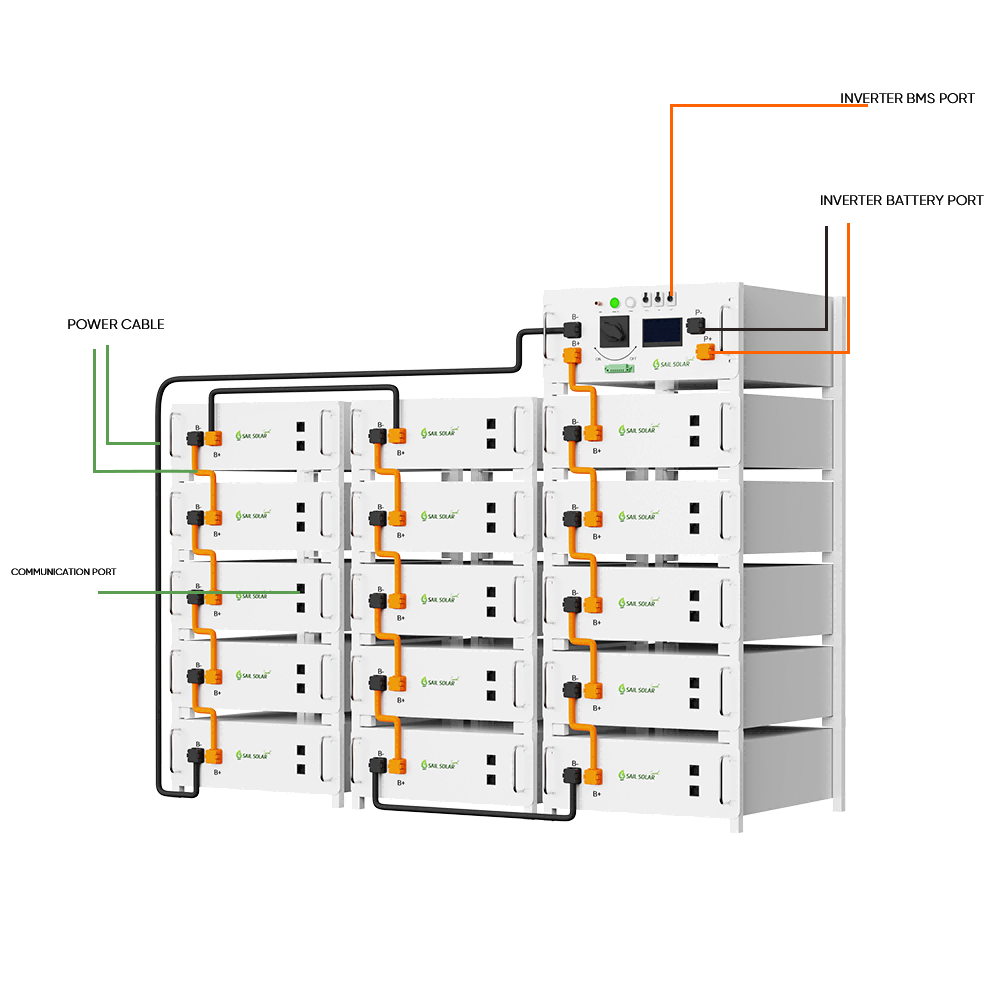
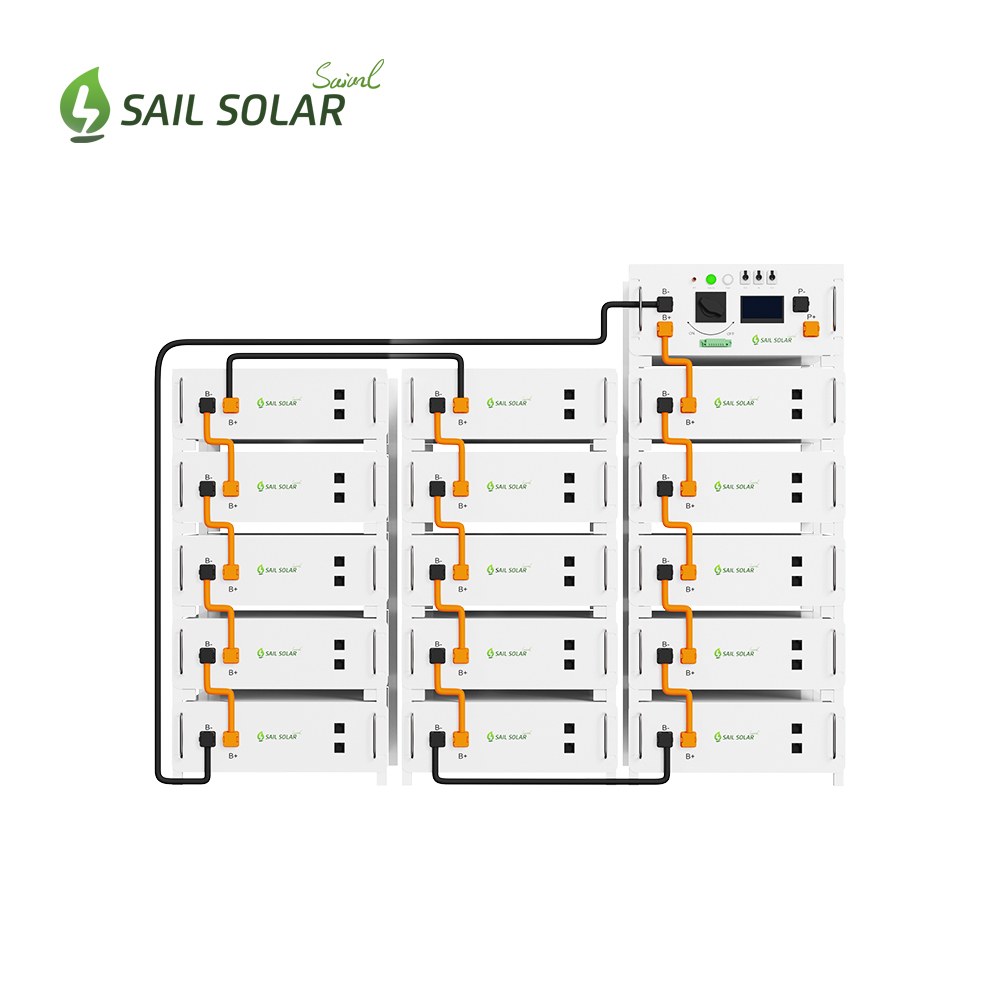
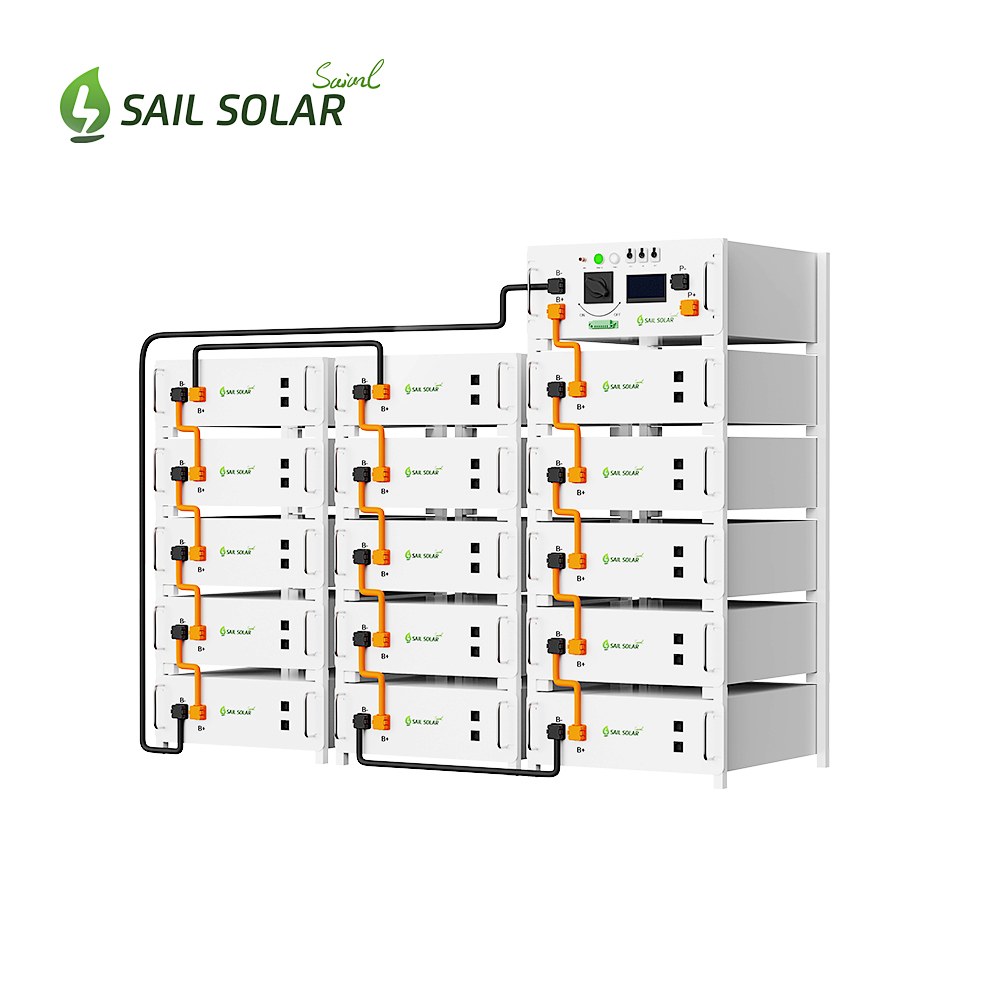
1. Battery Module (51.2V 100Ah)
Each battery module is a 51.2V LiFePO₄ lithium battery unit designed for series connection in high-voltage systems.
Main Interfaces on Each Module:
B+ / B− Power Terminals
High-current DC terminals are used for series connection between modules.
The orange power cables connect B+ to B− of adjacent modules to build a high-voltage battery string.
2. Power Cable (Orange Cable)
Used for series electrical connection between battery modules
Enables voltage stacking (e.g. 10 modules ≈ 512V nominal)
Designed for high current, low resistance, and secure locking
3. Communication Cable (Black Cable)
Connects all battery modules in sequence
Transfers real-time data to the master BMS
Supports system-level monitoring, balancing, and protection logic
Typically based on CAN or RS485 communication protocol
4. Master BMS (Top Control Unit)
The master BMS is installed on the top of the battery rack and acts as the central control and protection unit for the entire battery system.
5. Inverter Battery Port
High-voltage DC output interface from the battery system to the inverter or PCS
Directly connected to the inverter’s battery input
Transfers DC power for charging and discharging operation
6. Inverter BMS Port
Communication interface between battery BMS and inverter
Enables protocol-based control (CAN / RS485)
Allows inverter to read battery SOC, voltage, current, alarms, and operating limits
Ensures safe and compatible operation with hybrid inverters and PCS
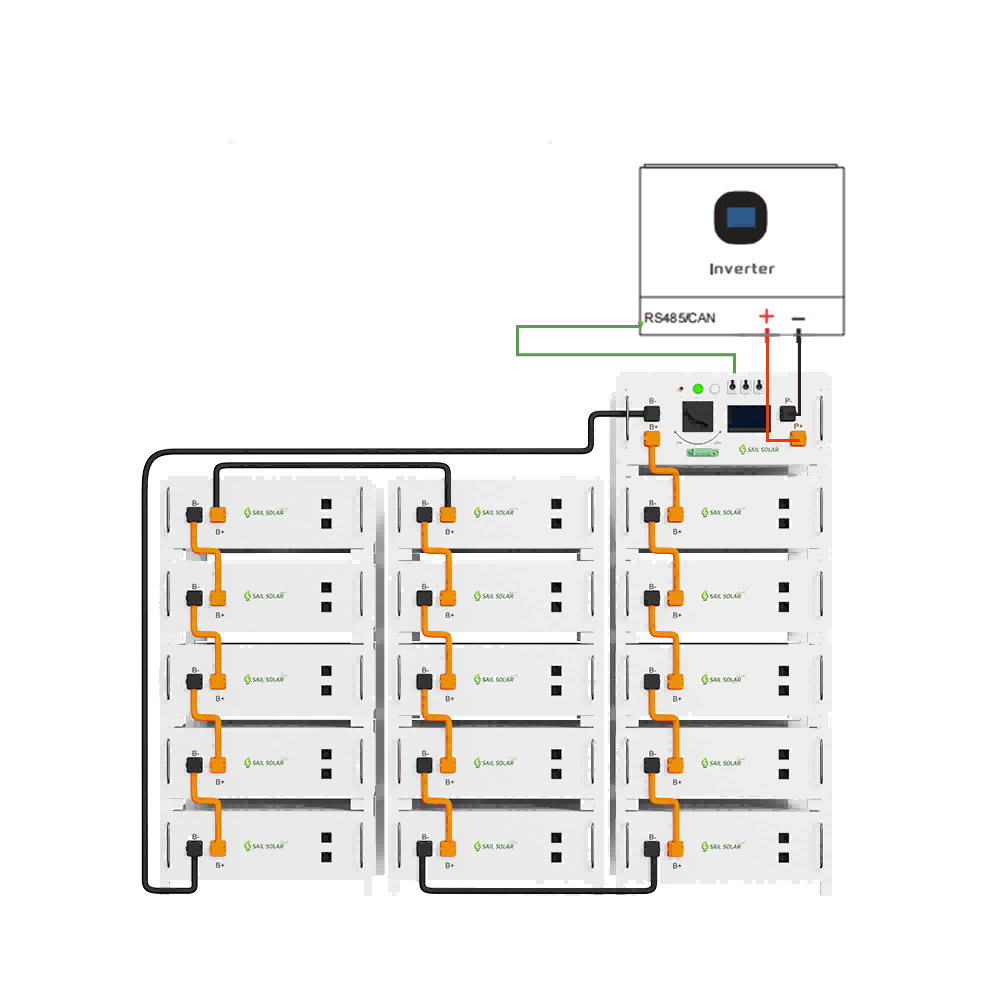
High-Voltage Battery System Connected to Inverter
The battery modules (51.2V 100Ah) are connected in series to form a high-voltage DC battery string.
All modules communicate with the master BMS, which provides centralized monitoring, protection, and control.
The battery system is connected to the inverter through:
-DC power terminals (P+ / P−) for bidirectional energy flow
-RS485 / CAN communication port for real-time BMS–inverter data exchange
This architecture ensures high efficiency, system safety, and seamless compatibility with hybrid inverters and PCS.
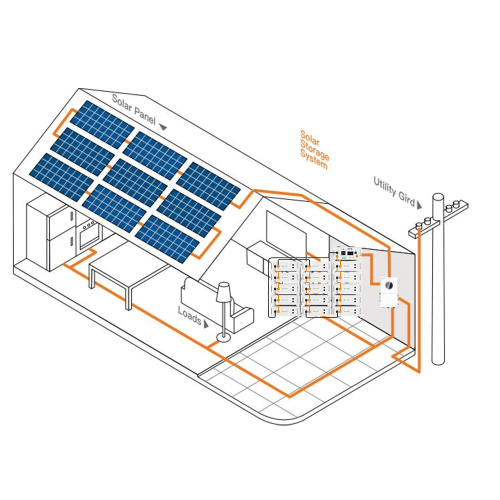
Solar PV + Energy Storage System Overview
The diagram illustrates a solar power system integrating PV panels, a hybrid inverter, lithium battery storage, household loads, and the utility grid.
Solar panels generate DC power, which is converted by the inverter to supply loads and charge the battery system.
The energy storage system stores excess solar energy and provides power to loads when solar generation is insufficient or during grid outages.
The utility grid can supply power when needed and receive excess energy, ensuring stable and continuous operation of the entire system.
Certification
TAG :
Tel : +86 -18655186412
E-mail : Inquiry@sailsolarpv.com
Whatsapp : +86 -18655186412
Add : Building 7, Cross Border E-Commerce Supervision Zone, Hefei, China


© 2026 SAIL SOLAR ENERGY CO., LTD Todos os direitos reservados
|Mapa do site |XML| política de Privacidade